WALKSON
WALKSON
  • CNC Turning

CNC Turning

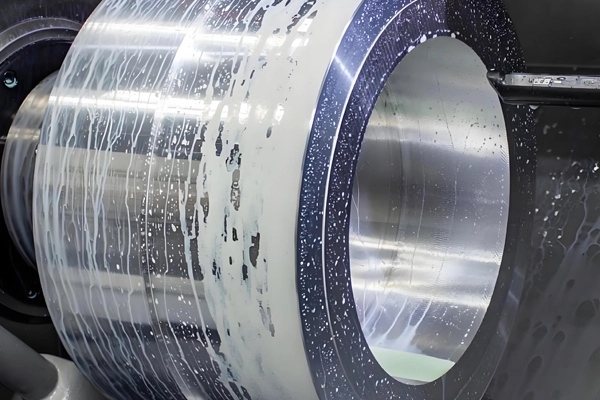
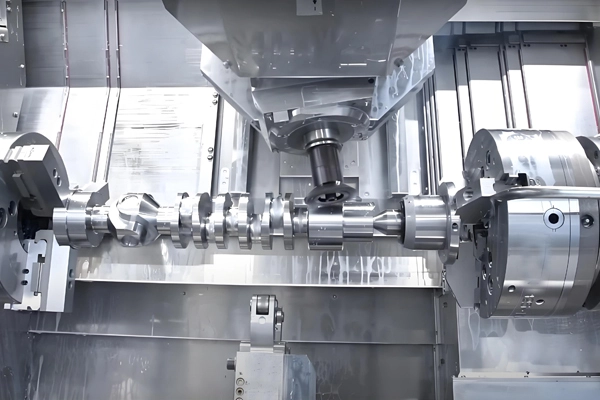
CNC turning machining services are vital for producing high-precision cylindrical parts from castings and forgings. These services utilize specialized equipment, inspection measures, and rigorous quality control to meet industry-specific standards. 


Applications of CNC Turning for Castings and Forgings

1. Precision Machining:

  • Creates cylindrical, conical, and spherical components.

  • Commonly used for shafts, rings, sleeves, flanges, and couplings.

2. Threading and Grooving:

  • Produces internal and external threads with high accuracy.

  • Includes groove machining for sealing or assembly features.

3. Facing and Contouring:

  • Improves surface flatness for better assembly and functionality.

4. Boring and Reaming:

  • Enhances internal diameters of cast or forged holes for tight tolerances.

5. Chamfering and Deburring:

  • Prepares edges for safety, functionality, and assembly ease.

6. High-Volume Production:

  • CNC turning enables rapid production of uniform components.


Machines Used for CNC Turning

1. CNC Turning Centers:

  • Perform primary turning operations, suitable for cylindrical and symmetrical parts.

2. Multi-Axis CNC Turning Machines:

  • 3, 4, and 5-axis machines for intricate geometries and secondary milling operations.

3. Vertical Turning Lathes (VTL):

  • Best for large, heavy castings and forgings requiring vertical orientation.

4. CNC Mill-Turn Centers:

  • Combines turning and milling capabilities for complex parts in a single setup.


Dimensional Inspection Measures

1. Manual Inspection Tools:

  • Micrometers, bore gauges, and ring gauges for verifying diameters and threads.

2. Coordinate Measuring Machines (CMM):

  • Ensures dimensional accuracy and alignment of complex geometries.

3. Profile Projectors:

  • Used for inspecting grooves, threads, and contours.

4. Surface Roughness Testers:

  • Verifies that the finish meets specifications.

5. Runout and Concentricity Gauges:

  • Checks for deviations in roundness and alignment.

6. Optical and Laser Scanners:

  • Used for non-contact inspection of precision features.


Inspection Reports

1. First Article Inspection (FAI):

  • Comprehensive documentation validating initial production parts.

2. Geometric Dimensioning and Tolerancing (GD&T) Reports:

  • Specifies compliance with complex geometric tolerances.

3. Thread Inspection Reports:

  • Includes pitch, angle, depth, and diameter verification for threaded parts.

4. Material Test Reports (MTR):

  • Confirms the metallurgical properties of cast and forged materials.

5. Surface Finish Reports:

  • Details the achieved surface roughness (e.g., Ra values).

6. Runout and Alignment Reports:

  • Certifies that rotational components meet specified alignment standards.


Quality Control Measures

1. Pre-Machining Inspection:

  • Evaluate raw castings and forgings for defects like porosity, inclusions, or surface cracks.

2. In-Process Monitoring:

  • Real-time monitoring of speed, feed, and temperature to ensure consistency.

3. Post-Machining Inspection:

  • Comprehensive checks on all critical features, such as diameters, threads, and surface finishes.

4. Tool Wear Monitoring:

  • Regular inspection of cutting tools to maintain precision and avoid defects.

5. Non-Destructive Testing (NDT):

  • Uses ultrasonic, magnetic particle, or dye penetrant methods to detect internal or surface flaws.

6. Compliance with Standards:

  • Adherence to industry-specific certifications like ISO 9001 and API standards.

7. Traceability:

  • Every part is marked with batch numbers for traceability and quality assurance.


Key Benefits of CNC Turning for Castings and Forgings

1. High Precision: Achieves tight tolerances essential for industrial applications.

2. Enhanced Efficiency: Reduces lead times with automated processes.

3. Repeatability: Ensures consistency across high-volume production runs.

4. Cost-Effectiveness: Minimizes material waste and rework costs.


Leave Us a Message
Your Name
Email
Phone
Company
Company
Add your drawings
Content
What's New in Walkson
What Materials Are Best for Alloy Discs Achieving 50J Charpy Impact Resistance When Sourcing from Chinese Manufacturers?
Mar 06 , 2026
What Materials Are Best for Alloy Discs Achieving 50J Charpy Impact Resistance When Sourcing from Chinese Manufacturers?
In the realm of precision engineered parts, alloy discs must often withstand sudden loads without fracturing, making Charpy impact resistance a critical metric. As a seasoned materials engineer with d...
What Are the Benefits of Using Manganese Hammers and Wear Liners in Metal Recycling Equipment Sourced from China?
Feb 11 , 2026
What Are the Benefits of Using Manganese Hammers and Wear Liners in Metal Recycling Equipment Sourced from China?
As a materials engineering professor with over three decades of experience in industrial metallurgy and recycling processes, I've seen firsthand how the right material choices can transform operat...