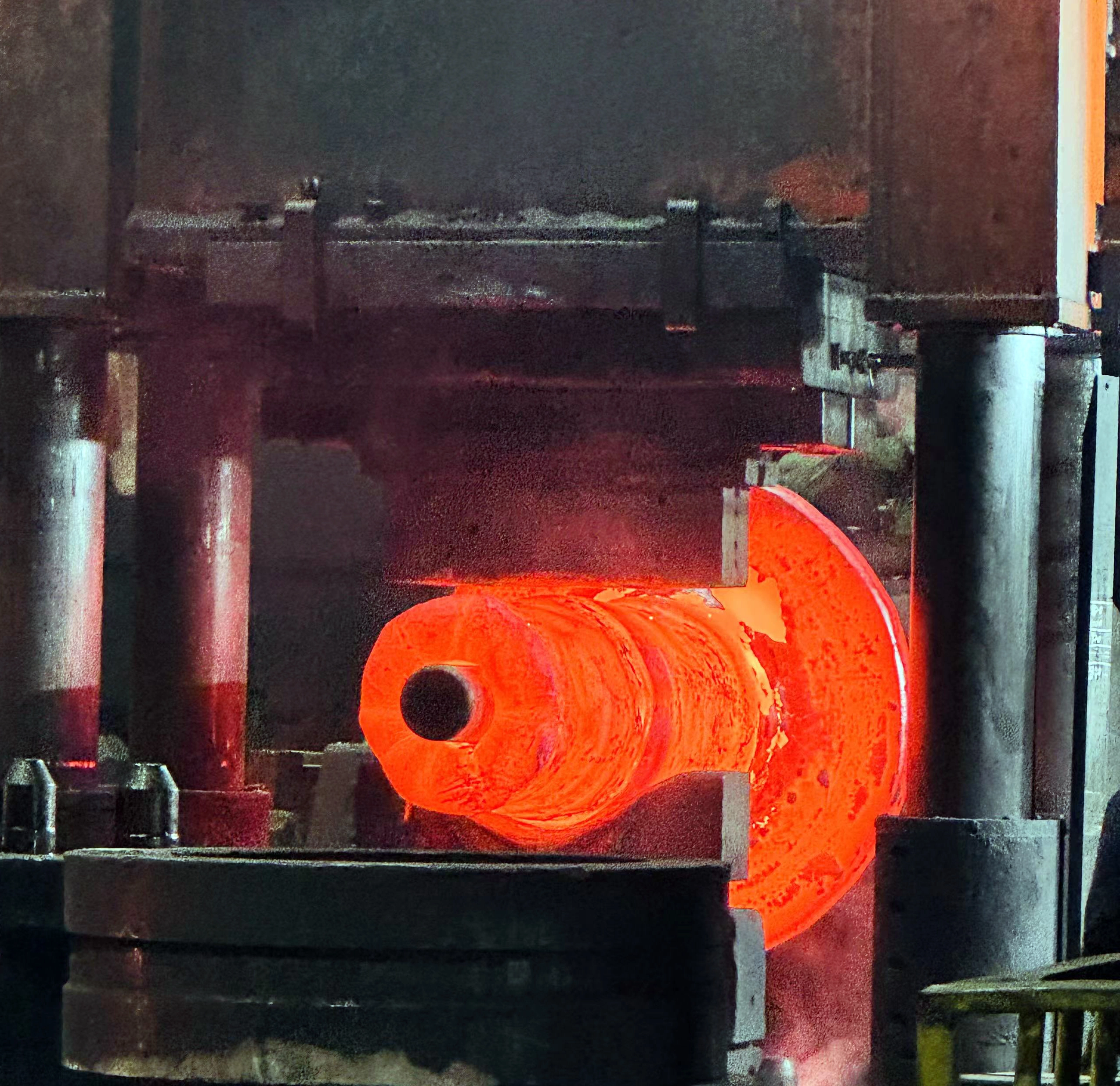
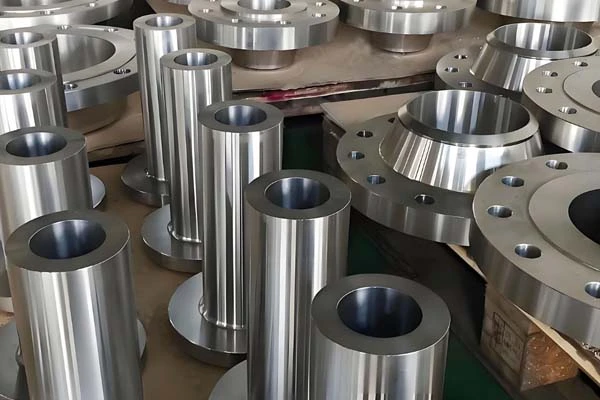
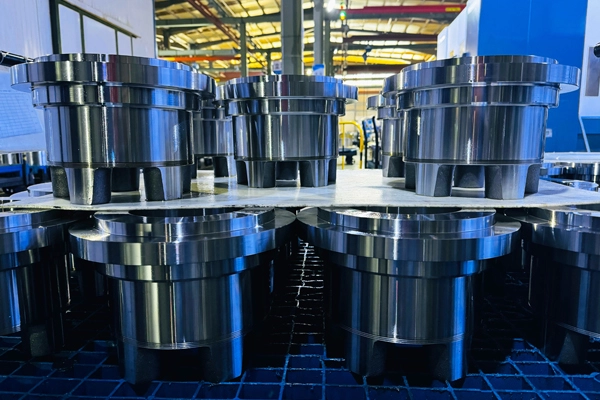
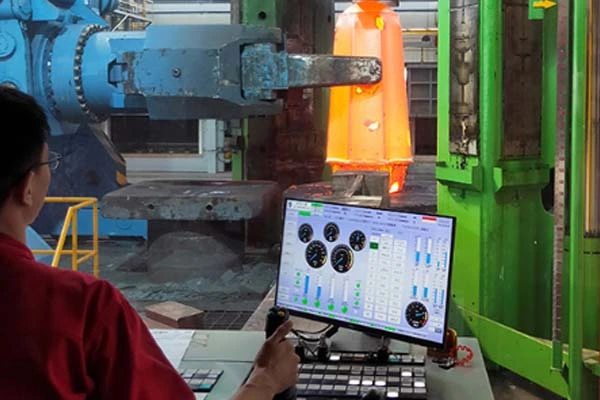
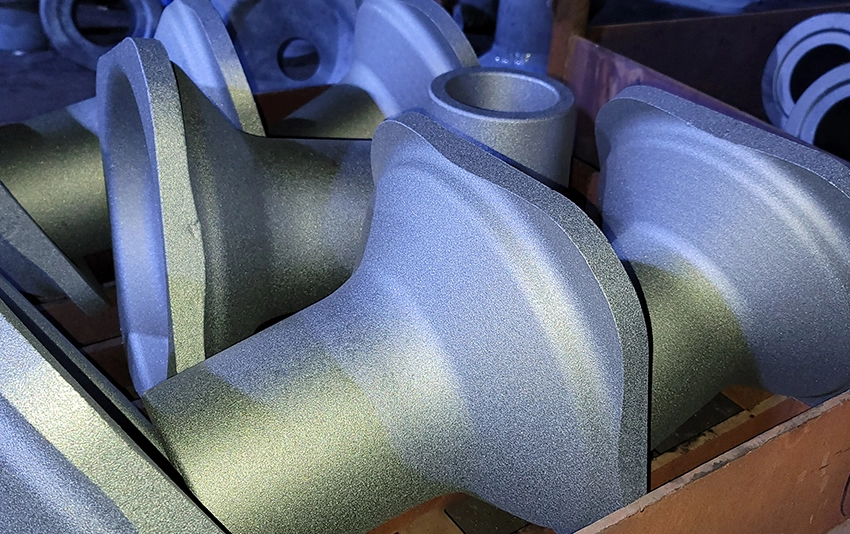
Walkson Open-die forging products are metal components manufactured through the Open-die forging process, where a heated metal billet is shaped by repeated hammering or pressing between flat or simple dies. Unlike closed-die forging, Walkson Open-die forging does not confine the metal within a die cavity, allowing for larger and less complex shapes to be created.
Our open die forging process is ideal for producing custom parts such as shafts, flanges, and rings, commonly referred to as open die parts, tailored for heavy-duty applications in industries like oil & gas, power generation, and heavy machinery.
1. Large Size and High Strength:
Walkson Open-die forging is ideal for creating large parts such as shafts, blocks, and rings with excellent strength and durability.
2. Simple Shapes:
Products typically have simpler geometries compared to closed-die forgings, though they can be machined into more complex shapes after forging.
3. Customizability:
The process allows for flexibility in size and shape, making it suitable for custom, low-volume, or specialty orders.
4. Superior Material Properties:
Walkson Open-die forging aligns the grain structure of the metal, enhancing strength, toughness, and fatigue resistance.
5. Wide Range of Materials:
It accommodates various materials, including carbon steel, alloy steel, stainless steel, aluminum, titanium, and nickel-based alloys.
1. Shafts:
Rotors and Drive Shafts: Used in turbines, engines, and heavy machinery.
Marine Propeller Shafts: High-strength components for ships and submarines.
2. Rings:
Bearing Rings: Used in large machinery and wind turbines.
Flanges: For pressure vessel connections and pipelines.
3. Discs and Hubs:
For gear blanks, couplings, and rotary components in heavy industries.
4. Bars and Blocks:
Forged Bars: For machining into custom parts.
Die Blocks: Used as preforms for further processing into tools and components.
5. Large Industrial Components:
Press columns, rollers, and crane hooks for construction and industrial applications.
6. Tooling and Mold Components:
Dies and mandrels used in manufacturing processes.
1. Power Generation:
Turbine shafts, generator rotors, and pressure vessel components in thermal, nuclear, and hydroelectric plants.
2. Oil & Gas:
Drill collars, wellhead components, and large flanges for rigs and refineries.
3. Automotive and Heavy Equipment:
Axles, connecting rods, and suspension parts for trucks, trains, and construction machinery.
4. Marine Industry:
Propeller shafts, rudder stocks, and engine components for ships.
5. Mining and Construction:
Heavy-duty components like crusher shafts and mill rolls.
1. Improved Mechanical Properties:
Enhanced toughness, ductility, and resistance to fatigue and impact due to the refined grain structure.
2. High Versatility:
Capable of producing large, customized parts that meet specific application requirements.
3. Cost-Effective for Large Parts:
Ideal for low-volume production of large components where the cost of closed-die tooling would be prohibitive.
4. Wide Material Compatibility:
Suitable for almost all forgeable metals, including those for high-temperature or high-stress environments.
5. Extended Lifespan:
High resistance to failure under heavy loads or extreme conditions.
An open die forging diagram illustrates the steps involved, helping engineers understand how the metal is shaped and formed.
1. Heating the Material:
The billet or ingot is heated to a malleable temperature in a furnace.
2. Positioning on the Die:
The workpiece is placed on a flat or simple die, and controlled hammering or pressing is applied.
3. Shaping the Metal:
Skilled operators manipulate the workpiece between hammer blows or press strokes to achieve the desired shape.
4. Cooling and Post-Processing:
After forging, the product is cooled and often undergoes heat treatment or machining to achieve final specifications.
Less Complex Shapes: Cannot produce intricate or detailed geometries without additional machining.
Requires Skilled Operators: Precision depends on the expertise of the operator and the tools used.
Material Waste: Some excess material may need to be removed during machining.
Walkson Open-die forging products are large, durable components with excellent mechanical properties, widely used in industries requiring strength and reliability. This process is ideal for creating custom parts, particularly for heavy-duty applications in heavy machinery, power generation, oil & gas, and marine industries.