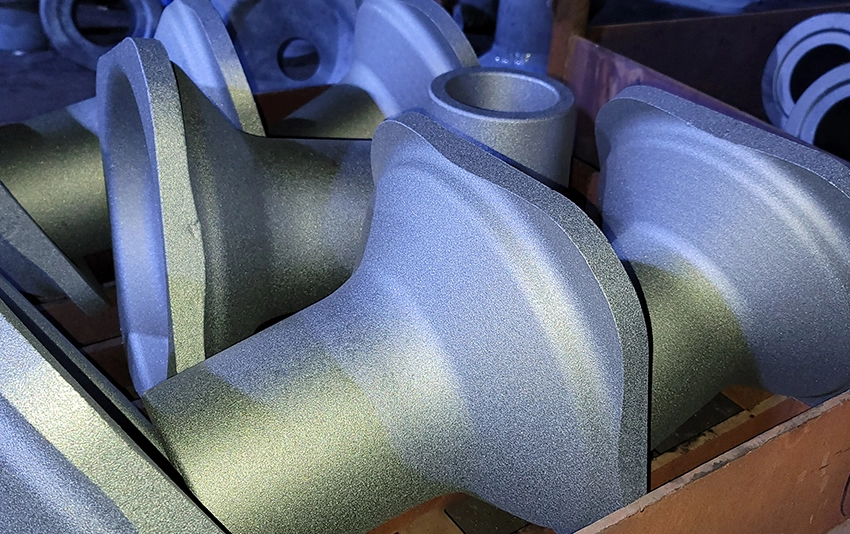
Process of Hot Forging
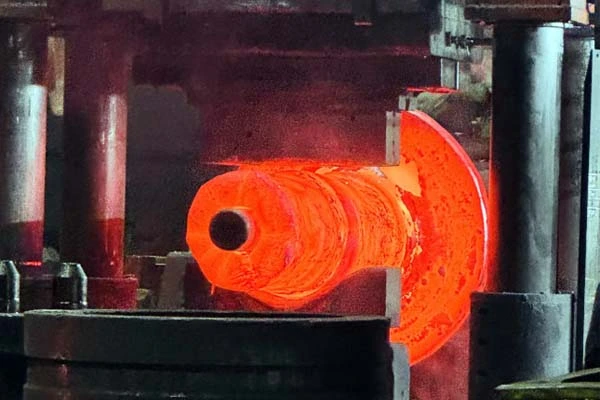
1. Heating the Metal: The metal (typically steel, aluminum, or titanium) is heated in a furnace to a temperature that is usually between 70-85% of its melting point. For steel, this can be around 900°C to 1200°C (1650°F to 2200°F), depending on the alloy.
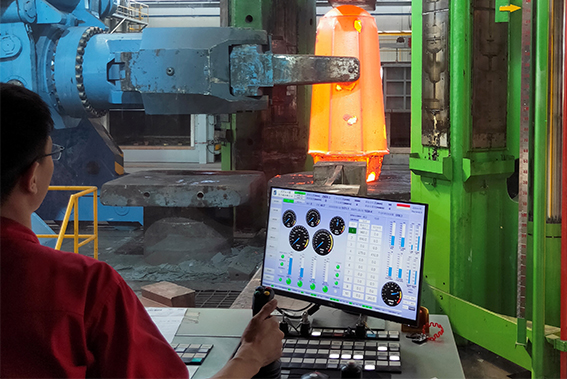
2. Shaping the Metal: Once heated, the metal is placed in a forging die or between two dies in a hammer, press, or screw press. The die applies pressure to shape the metal into the desired form, such as gears, shafts, or discs.
3. Cooling: After the metal has been shaped, it is allowed to cool either in the open air or in a controlled cooling environment (e.g., oil quenching or water cooling, depending on the material and desired properties).
Advantages of Hot Forging
Enhanced Precision: Hot die forging allows for the production of parts with intricate shapes and tight tolerances, reducing the need for additional machining.
Improved Mechanical Properties: Hot forging refines the grain structure of the material, leading to improved strength, toughness, and fatigue resistance compared to cast or cold-worked materials.
Increased Ductility: Heating the material reduces its hardness, allowing it to be more easily shaped, reducing the risk of cracking or fracturing during shaping.
High Production Efficiency: Hot forging allows for the mass production of high-quality, complex components, making it efficient for large-scale manufacturing.
Material Conservation: Hot forging processes can reduce material waste as they often require less material than casting processes.
Applications of Hot Forging
1. Automotive Industry
Engine Components: Hot-forged components, such as crankshafts, connecting rods, and camshafts, are critical for automotive engines. The hot forging process gives these components the high strength required to handle the stress and fatigue encountered in engine operations.
Transmission Parts: Gears, shafts, and cogs used in automotive transmission systems are often made through hot forging due to the need for high strength and resistance to wear.
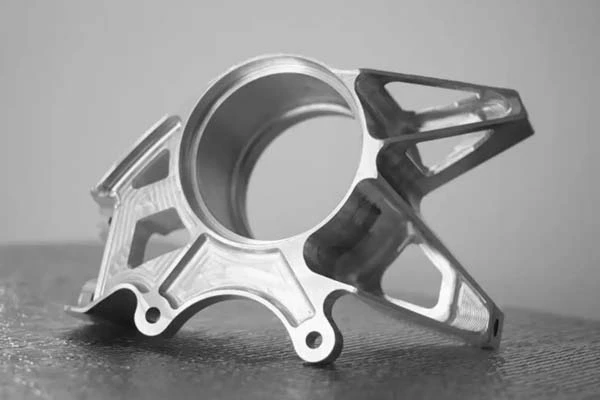
Suspension Components: Parts like control arms, steering knuckles, and wheel hubs are hot-forged to ensure that they are strong enough to withstand the dynamic forces in suspension systems.
Axles: Forged axle shafts are commonly used in automotive and heavy truck applications, where strength, toughness, and fatigue resistance are critical for high-load-bearing capabilities.
Benefits in Automotive:
High Strength-to-Weight Ratio: Components are lightweight but still strong enough for demanding automotive applications.
Durability: Forged parts can withstand the high-stress environments common in vehicles.
2. Oil and Gas Industry
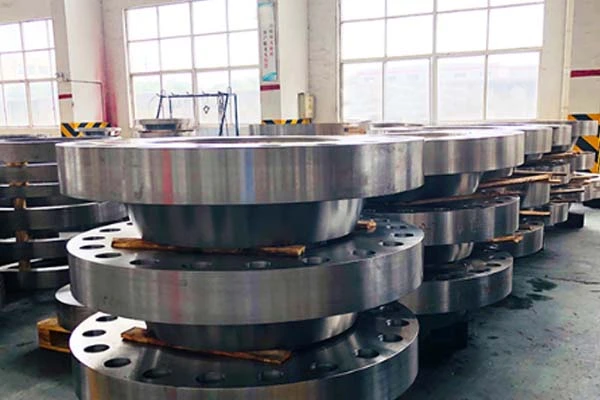
Valves and Fittings: The valves, flanges, and fittings used in the oil and gas industry are often hot-forged to ensure they can withstand the high-pressure environments of pipelines and drilling operations.
Drill Bits and Tooling: The components used in drilling equipment, such as drill bits, casing tools, and subsea equipment, often require hot forging for strength, durability, and resistance to abrasion.
Pump Components: Pump shafts, impellers, and casing components used in oil and gas pumping systems are often hot-forged to handle high-pressure operations and resist erosion.
Benefits in Oil and Gas:
High-Strength Components: Critical components need to withstand extreme pressures, temperatures, and corrosive environments.
Resistance to Fatigue: Forged parts are less prone to fatigue failure, ensuring safety in harsh environments.
3. Heavy Machinery and Construction Equipment
Hydraulic Components: Components like hydraulic cylinders, pistons, and connecting rods are hot-forged for use in construction and mining equipment due to their strength and ability to operate under high loads.
Excavator Parts: Parts such as tracks, bearings, gears, and crankshafts are often hot-forged to withstand the extreme stress and heavy wear encountered during digging, lifting, and other heavy-duty tasks.
Forged Couplings: Couplings used to connect power transmission components in machinery are forged for strength and longevity.
Benefits in Construction and Heavy Machinery:
Wear and Tear Resistance: Forged components provide excellent durability in high-stress environments.
Load-Bearing Capacity: Hot-forged parts can handle heavy loads and maintain performance under adverse conditions.
4. Industrial Equipment Manufacturing
Gear Wheels: Industrial gears, especially planetary gears, spur gears, and worm gears, are often hot-forged to ensure they can handle heavy loads and high rotational speeds.
Shafts: Components like drive shafts, piston rods, and spindles in manufacturing machinery are commonly hot-forged to ensure they provide optimal strength and rigidity for heavy industrial applications.
Flange Connections: Hot-forged flanges are commonly used in pipe systems for industries like chemicals, pharmaceuticals, and manufacturing.
Benefits in Industrial Manufacturing:
Toughness and Resistance: Forged components provide superior toughness and resistance to wear and tear in continuous operations.
Precision and Reliability: The process ensures that components are highly precise, which is critical for smooth operations in machinery.
Materials Used in Hot Forging
Steel: Carbon steel, alloy steel, and stainless steel are commonly hot-forged for their durability, toughness, and resistance to corrosion.
Aluminum: While not as common as steel, aluminum alloys are also hot-forged, particularly in the aerospace and automotive industries, for lightweight yet strong components.
Titanium: Titanium alloys are forged for their high strength-to-weight ratio and corrosion resistance, making them ideal for aerospace and military applications.
Copper and Brass: Used for electrical components, plumbing fittings, and other applications where corrosion resistance and electrical conductivity are needed.
| Material Grade | Forging Temp Range | Key Properties | Common Industrial Applications |
| Carbon Steel | 900°C - 1250°C | High Strength, Cost-Effective | Gears, Shafts, Brackets |
| Alloy Steel | 950°C - 1200°C | Wear Resistance, Toughness | Oil & Gas Valves, Drill Bits |
| Stainless Steel | 1000°C - 1250°C | Corrosion Resistance | Food Processing, Chemical Flanges |
| Titanium | 850°C - 950°C | Strength-to-Weight Ratio | Aerospace, Medical Implants |
Hot Forging vs. Cold Forging: Which Process is Right for Your Project?
Understanding the differences between hot and cold forging is essential for selecting the most cost-effective and high-performance manufacturing method. While both processes involve shaping metal, they occur at different temperatures and yield distinct mechanical properties.
Key Differences at a Glance
| Feature | Hot Forging | Cold Forging |
| Operating Temperature | Above recrystallization temperature (typically 900°C–1250°C for steel). | At or near room temperature. |
| Material Ductility | High: Metal flows easily into complex shapes. | Low: Metal is harder to deform, increasing the risk of cracking. |
| Dimensional Precision | Moderate: Scaling may occur due to cooling contraction. | High: Excellent dimensional tolerances and surface finish. |
| Mechanical Strength | Superior: Refines grain structure for maximum toughness. | High: Increases strength through strain hardening (work hardening). |
| Production Cost | Higher per-piece heating costs, but lower tooling wear for complex parts. | Lower heating costs, but requires expensive, high-strength tooling. |
| Common Applications | Heavy-duty parts like crankshafts, gears, and aircraft bulkheads. | Smaller, high-precision components like bolts, rivets, and simple shafts. |
Why Choose Hot Forging?
Hot forging is the preferred method for heavy-duty industrial applications where material integrity is non-negotiable. By heating the metal above its recrystallization point, we eliminate internal stresses and create a refined, continuous grain flow. This results in components with:
Extreme Fatigue Resistance: Crucial for automotive and aerospace safety-critical parts.
Massive Weight Capabilities: Ideal for large-scale industrial shafts and flanges.
Complexity: Allows for intricate geometries that cold forging simply cannot achieve without fracturing the material.
When to Consider Cold Forging?
Cold forging is often selected for smaller components where surface aesthetics and dimensional accuracy are the primary concerns. Since there is no thermal expansion or contraction, the parts require minimal post-forging machining.
Conclusion
Hot forging is a critical manufacturing process that offers exceptional mechanical properties, including high strength, fatigue resistance, and toughness, making it ideal for applications where performance under high stress and demanding conditions is essential. From automotive and aerospace to oil and gas and military applications, hot-forged components play a crucial role in ensuring the durability and reliability of industrial machinery, vehicles, and equipment. The versatility, efficiency, and high quality of hot forging make it an indispensable process for producing components that can withstand the toughest operating environments.
 English
  Deutsch
  français
  русский
  فارسی
فارسی  العربية
  Español
  日本語
日本語  한국어
한국어  italiano
  português
  dansk
dansk  Suomi
Suomi