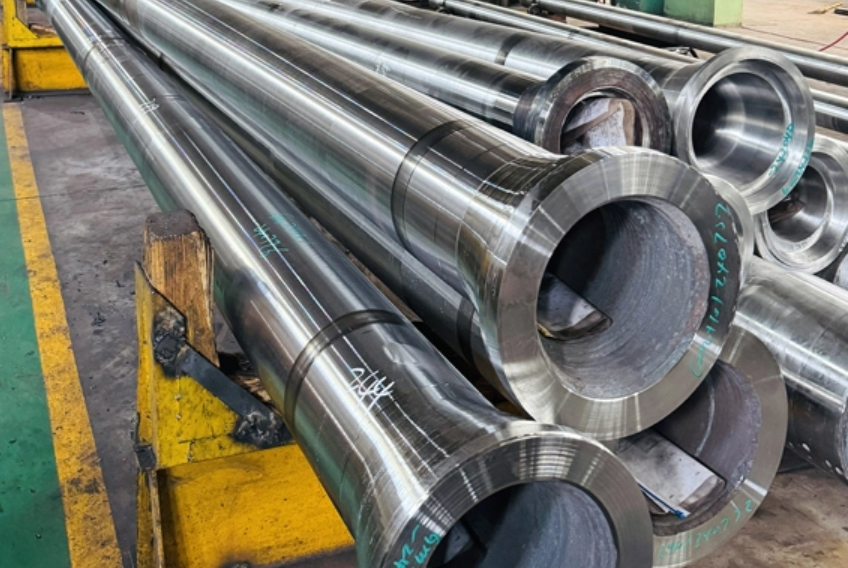
Selecting the right centrifugal casting tube manufacturer is an important step for industries requiring reliable cylindrical components with consistent quality and performance. These tubes are commonly used in demanding applications where material strength, temperature resistance, corrosion resistance, and dimensional accuracy are critical.
When evaluating centrifugal casting tube manufacturers, buyers should consider more than production capability. Material selection, casting technology, inspection methods, machining capability, and supplier qualification all influence the final performance of the component.
A complete evaluation process helps companies choose a supplier that can provide suitable casting solutions for their operating conditions and project requirements.

What Should Buyers Expect from Centrifugal Casting Tube Manufacturers?
Professional centrifugal casting tube manufacturers should be able to support customers from material selection to final inspection. A reliable supplier should understand the relationship between alloy characteristics, casting processes, and application requirements.
For industrial applications, buyers should evaluate whether the manufacturer can provide:
Suitable alloy recommendations based on operating conditions
Stable centrifugal casting processes
Accurate dimensional control
Non-destructive testing capabilities
Complete quality documentation
A manufacturer with experience in different industries can better understand specific requirements related to pressure, temperature, corrosion, and mechanical loads.
Before selecting a supplier, buyers should also review production experience, available equipment, quality systems, and previous application examples.
Selecting Alloys Based on Temperature and Corrosion Conditions
Alloy selection directly affects the service life and reliability of centrifugal casting tubes. Different applications may require different material characteristics depending on operating temperature, chemical exposure, and mechanical stress.
High-temperature environments may require alloys with strong heat resistance and oxidation resistance, while corrosive environments may require materials with improved corrosion performance.
Before ordering, buyers should provide information about:
Operating temperature range
Chemical exposure conditions
Pressure requirements
Mechanical loading conditions
Expected service environment
Choosing an unsuitable alloy may result in premature wear, corrosion, deformation, or reduced component life. Therefore, material selection should always be based on actual operating conditions rather than general material preference.
Specifying OD, ID, Wall Thickness, Length and Tolerances
Dimensional requirements are another key factor when evaluating centrifugal cast tubes. Accurate specifications help manufacturers produce components that fit correctly within the final assembly.
| Specification Item | Why It Matters |
| Outer diameter (OD) | Determines external fit and installation requirements |
| Inner diameter (ID) | Affects flow path and internal dimensions |
| Wall thickness | Influences strength and service performance |
| Length | Ensures compatibility with final application |
| Tolerances | Controls machining accuracy and assembly quality |
Buyers should provide complete drawings or technical specifications whenever possible. Clear dimensional information reduces communication problems and minimizes the risk of additional modifications after production.
For critical industrial components, dimensional accuracy should be verified through inspection procedures before shipment.
Casting, Heat Treatment and Final Machining Requirements
The final performance of centrifugal casting tubes depends not only on the casting process but also on post-casting treatments and finishing operations.
Heat treatment can improve material properties by adjusting internal structure, hardness, strength, and stability. Different alloys require different treatment methods to achieve the expected performance.
For projects requiring additional processing, manufacturers may also provide machining support after casting. A professional cnc machining service can help achieve accurate dimensions, surface finishes, and final component requirements.
Proper coordination between casting, casting and forging heat treatments, and machining processes helps ensure consistent product quality.
Buyers should confirm whether the supplier can manage the complete manufacturing process or whether additional processing will be required from external providers.
Material Traceability, Supplier Qualification and RFQ Checklist
Before approving a supplier, buyers should review quality documentation and production capability carefully.
Important RFQ information should include:
Material traceability is especially important for industrial applications where component reliability is critical. Suppliers should be able to provide material certificates, inspection records, and relevant testing documents.
A qualified supplier should also demonstrate consistent manufacturing capability and effective quality control procedures.
Conclusion
Evaluating centrifugal casting tube manufacturers requires consideration of material selection, dimensional requirements, manufacturing capability, and quality management. The right supplier should provide suitable alloys, accurate casting processes, reliable inspection, and technical support throughout the project. By clearly defining application requirements and reviewing supplier qualifications, buyers can select centrifugal casting solutions that provide better performance and long-term reliability.
FAQ About Centrifugal Cast Tubes
1. What factors should buyers consider when selecting centrifugal casting tube manufacturers?
Buyers should evaluate material capability, casting technology, dimensional accuracy, inspection methods, and supplier experience.
2. How does alloy selection affect centrifugal casting tubes?
Alloy selection affects corrosion resistance, temperature performance, strength, and service life under different operating conditions.
3. Why are heat treatment and machining important after casting?
Heat treatment improves material properties, while machining helps achieve required dimensions, surface quality, and assembly accuracy.
4. What information should be included in a centrifugal casting tube RFQ?
An RFQ should include material requirements, drawings, dimensions, application conditions, quantity, testing requirements, and delivery expectations.