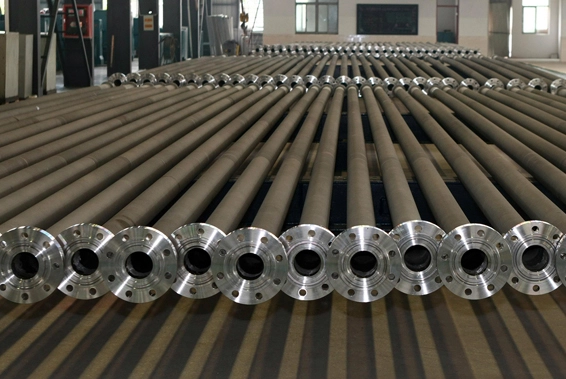
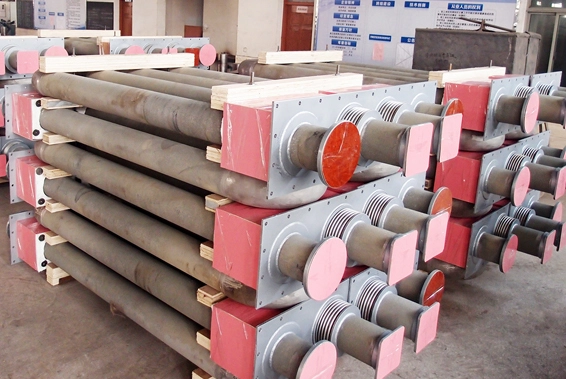
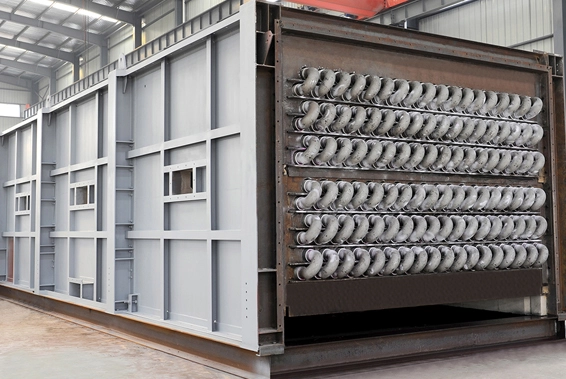
Product Application: Centrifugal Casting Pipes in Reformer Heaters
Centrifugal casting pipes are integral to reformer heaters, which are specialized furnaces used in high-temperature, high-pressure processes. WALKSON’s pipes are engineered for the following applications:
· Petrochemical Industry:
Steam Methane Reformers (SMR): Used in hydrogen production, where pipes operate at temperatures above 900°C and resist corrosive gases like hydrogen, methane, and carbon monoxide.
Ethylene Cracking Furnaces: Facilitate the thermal cracking of hydrocarbons, requiring pipes with exceptional creep resistance and thermal stability.
· Fertilizer Production:
Ammonia Synthesis Reformers: Support ammonia production by withstanding high-pressure steam and nitrogen-rich environments, ensuring long-term reliability.
· Oil and Gas Refining:
Catalytic Reforming Units: Enable the production of high-octane gasoline, where pipes endure cyclic thermal loads and carburizing atmospheres.
· Other Applications:
Direct reduction of iron (DRI) processes and other high-temperature reforming systems requiring robust, corrosion-resistant tubing.
These pipes are designed to handle extreme conditions, including temperatures up to 1200°C, pressures up to 50 bar, and exposure to aggressive chemical environments, ensuring operational efficiency and safety.
Technical Specification Matrix: Centrifugal Casting Reformer Tubes
| Technical Parameter | Specification & Manufacturing Capability |
| Max Operating Temperature | Up to 1200℃ (2192°F) - Engineered for extreme thermal stability |
| Max Design Pressure | Up to 50 Bar (725 PSI) - High-pressure containment for SMR/Ethylene processes |
| Material Grades | High-Alloy Steels: HK40, HP40, HP40-Nb, HP-Microalloyed |
| Nickel-Based Alloys: Inconel 600/625, Hastelloy X, Alloy 800H/HT |
| Manufacturing Standards | ASTM A297, ASTM A608, API 530, ASME Section VIII, DIN EN 10295 |
| Available Diameters | O.D. 50 mm to 1,500 mm (Custom sizes available upon request) |
| Wall Thickness Range | 6 mm to 100 mm - Precision-controlled via centrifugal force |
| Surface Finish (I.D./O.D.) | As-cast or Precision Machined (Internal boring up to Ra 0.8 μm) |
| Quality Assurance (NDT) | 100% Radiography (X-Ray), Eddy Current, Ultrasonic (UT), Hydrostatic Testing |
| Compliance Certification | EN 10204 Type 3.1 & 3.2; Witnessed by SGS, BV, or TUV |
Optimized Creep Resistance: Unlike static castings, WALKSON’s centrifugal casting process eliminates center-line shrinkage and porosity. By utilizing HP-Nb micro-alloyed materials, our reformer pipes offer superior long-term creep rupture strength and resistance to thermal cycling, ensuring a service life exceeding 100,000 hours in typical Steam Methane Reforming (SMR) environments.
Functions of WALKSON Centrifugal Casting Pipes
WALKSON’s centrifugal casting pipes deliver critical functions in reformer heaters:
· Thermal Resistance: High alloy and nickel-based materials (e.g., Inconel 600, Hastelloy X, HP-Nb alloys) maintain structural integrity at elevated temperatures, preventing deformation or failure.
· Corrosion and Oxidation Resistance: Nickel-based alloys resist carburization, oxidation, and nitridation, extending service life in harsh reformer environments.
· Mechanical Strength: The centrifugal casting process creates a dense, uniform microstructure, enhancing tensile strength and creep resistance.
· Pressure Containment: Pipes are engineered to withstand high internal pressures, ensuring safe operation in reformer systems.
· Customizability: Available in various diameters, wall thicknesses, and lengths to meet specific reformer heater designs, ensuring seamless integration.
Manufacturing Process: Precision and Compliance
WALKSON’s centrifugal casting pipes are manufactured using advanced technology and strict adherence to international standards, ensuring quality and reliability. Below is a detailed overview of the production process:
1. Material Selection
· Standards: ASTM A297, ASTM A608, DIN EN 10295, and client-specific requirements.
· Materials: High alloy steels (e.g., HK40, HP40) and nickel-based alloys (e.g., Inconel 625, Hastelloy C276).
· Process: Raw materials are sourced from certified suppliers and subjected to chemical composition analysis per ASTM E1019 to verify alloy content and purity.
· Equipment: Spectrometers for precise material analysis.
2. Melting and Alloying
· Standards: ISO 9001 and ASME Section IX for melt quality control.
· Process: Alloys are melted in electric arc furnaces (EAF) or induction furnaces, refined to remove impurities, and degassed to ensure homogeneity.
· Equipment: High-capacity EAF and vacuum induction melting (VIM) systems.
· Quality Control: Molten metal is sampled and tested for compliance with ASTM E1019 standards.
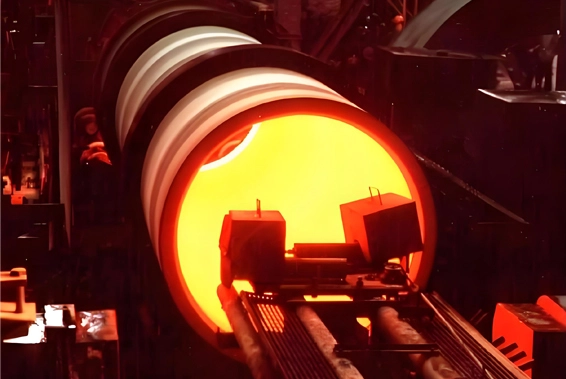
3. Centrifugal Casting
· Standards: ASTM A609, EN 12680, and API 530 for casting integrity.
· Process: Molten metal is poured into a rotating mold, where centrifugal force distributes the material evenly, forming a dense, defect-free pipe. The process minimizes inclusions and ensures a fine-grained microstructure.
· Equipment: Horizontal centrifugal casting machines with automated speed and temperature controls.
· Benefits: Produces pipes with superior mechanical properties and resistance to thermal fatigue.
4. Heat Treatment
· Standards: ASTM A447, ASME Section VIII, and client-specified heat treatment protocols.
· Process: Pipes undergo solution annealing, quenching, or tempering to optimize creep resistance, hardness, and corrosion resistance.
· Equipment: Computer-controlled heat treatment furnaces with precise temperature regulation.
· Quality Control: Temperature and time parameters are monitored per ISO 9001 standards.
5. Machining and Finishing
· Standards: ISO 2768 for dimensional tolerances, ASME B16.5 for flange compatibility, and ASTM A999 for surface finish.
· Process: Pipes are machined using CNC lathes and boring machines to achieve precise dimensions and surface finishes. Flanges or fittings are added as required.
· Equipment: CNC machining centers and surface grinders.
· Quality Control: Dimensional inspections are conducted using coordinate measuring machines (CMM).
6. Quality Assurance and Testing
WALKSON employs rigorous testing protocols to ensure product reliability, with full transparency for clients and third-party inspectors (e.g., SGS, Bureau Veritas). Clients are invited to witness all testing procedures.
Non-Destructive Testing (NDT)
· 100% X-Ray Testing:
Standard: ASTM E94, EN 12681.
Purpose: Detects internal defects such as voids, cracks, or inclusions.
Equipment: Digital radiographic systems with high-resolution imaging.
Process: Each pipe is fully scanned, with results documented in detailed inspection reports.
· 100% Eddy Current Testing:
Standard: ASTM E426, EN 1971.
Purpose: Identifies surface and near-surface discontinuities, such as micro-cracks or pitting.
Equipment: Automated eddy current testing systems with multi-frequency capabilities.
Process: Pipes are tested longitudinally and circumferentially for comprehensive coverage.
· Ultrasonic Testing (UT):
Standard: ASTM A609, EN 12680.
Purpose: Verifies wall thickness uniformity and detects internal flaws.
Equipment: High-frequency ultrasonic probes and automated scanning systems.
Process: Pipes are scanned to ensure compliance with dimensional and structural requirements.
Destructive Testing (where applicable)
· Tensile Testing:
Standard: ASTM E8.
Purpose: Measures yield strength, ultimate tensile strength, and elongation.
Equipment: Universal testing machines.
· Creep Testing:
Standard: ASTM E139.
Purpose: Evaluates long-term performance under high-temperature stress.
Equipment: Creep testing furnaces.
· Metallographic Analysis:
Standard: ASTM E112.
Purpose: Confirms grain size, phase distribution, and microstructure integrity.
Equipment: Optical microscopes and image analysis software.
Hydraulic Pressure Testing
· Standard: ASME B31.3, API 530, and client-specified requirements.
· Purpose: Verifies the pipe’s ability to withstand design pressures (e.g., up to 50 bar for reformer applications).
· Process: Pipes are filled with water, pressurized to 1.5 times the design pressure, and held for a specified duration to detect leaks or weaknesses.
· Equipment: Hydraulic pressure testing rigs with digital pressure monitoring.
· Client Witnessing: Clients or third-party inspectors can observe the test to confirm compliance.
Documentation
· Welding Procedure Specification (WPS) and Procedure Qualification Record (PQR): Pre-qualified per ASME Section IX for welded components, available upon request.
· Material Test Reports (MTR): Issued per EN 10204 Type 3.1 or 3.2, detailing chemical composition, mechanical properties, and test results.
· Inspection Reports: Comprehensive documentation of NDT, pressure tests, and dimensional inspections, certified by third-party inspectors if required.
Advantages of Choosing WALKSON
Partnering with WALKSON for centrifugal casting pipes offers unmatched benefits, making us the preferred supplier for reformer heater components:
1. Unrivaled Quality: Our pipes meet or exceed international standards, backed by 100% NDT and rigorous quality assurance processes.
2. Tailored Solutions: Customizable dimensions, alloy compositions, and configurations to meet specific reformer heater requirements.
3. Global Expertise: Trusted by leading petrochemical, fertilizer, and oil and gas companies worldwide, with a proven track record of excellence.
4. Transparency and Oversight: We welcome third-party inspectors (e.g., SGS, BV) and invite clients to witness testing, ensuring confidence in our products.
5. Cutting-Edge Technology: Advanced centrifugal casting machines, CNC machining centers, and NDT equipment deliver precision and reliability.
6. Comprehensive Support: Our experienced engineers provide consultation from design to installation, optimizing performance and longevity.
7. Efficient Delivery: Streamlined production and logistics ensure competitive lead times without compromising quality.
8. Sustainability Commitment: Eco-friendly manufacturing practices reduce waste and energy consumption, aligning with global environmental standards.
9. Cost-Effective Performance: Long-lasting pipes with minimal maintenance reduce downtime and operational costs.
Consult with WALKSON Today
Elevate your reformer heater systems with WALKSON’s high alloy and nickel-based centrifugal casting pipes. Engineered for durability, corrosion resistance, and compliance with the highest industry standards, our pipes deliver exceptional performance in the most challenging environments.
Contact WALKSON today to discuss your project needs, request a quote, or schedule a consultation with our technical experts. Visit our website at www.walkson.com or email us at info@walkson.com. Let WALKSON be your trusted partner for precision-engineered centrifugal casting solutions.
 English
  Deutsch
  français
  русский
  فارسی
فارسی  العربية
  Español
  日本語
日本語  한국어
한국어  italiano
  português
  dansk
dansk  Suomi
Suomi